About Me
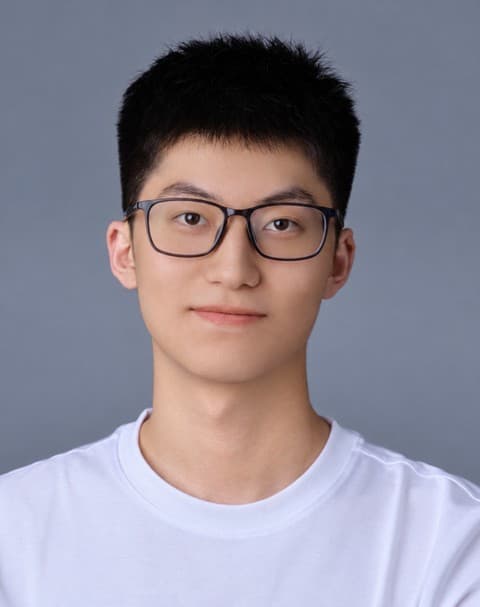
I am a final-year Engineering Science (Robotics) student at the University of Toronto working on embodied AI. My research asks how robots can learn from their own failures: coding agents that build and repair robot programs, harnesses that carry that experience across tasks, and benchmarks that show where VLA and world action models break. I am an undergraduate researcher in the Robot Vision and Learning Lab with Prof. Florian Shkurti and a research assistant at Huawei Noah's Ark Lab. Our team won 1st place in the 2026 BEHAVIOR Challenge at CoRL 2026. I am applying to master's and PhD programs for Fall 2027.
Research Experience
- Designed an episodic memory module for frozen VLA policies (π0.5) that stores context, plan, failure, and recovery in one entry to support plan selection and failure recovery on memory-dependent manipulation tasks (RMBench); analyzed which failure modes cross-episode memory can and cannot fix.
- Undergraduate thesis on agentic learning from failed attempts in code-as-policy robotics, where a frozen coding agent converts rollout videos, API traces, and scores into verified, failure-specific progress checks. Evaluating on RoboTwin 2.0 and EmbodiedSWE-Bench, with a 22-percentage-point improvement in task success on RoboTwin 2.0 so far.
- Major contributor to The North Star's BEHAVIOR Challenge system: 1st place at CoRL 2026 (Q score 0.683; 48.2% full-task success on 100 household tasks), after 4th place at NeurIPS 2025. Built the agentic harness, whose capability- and history-based policy cards route tasks among VLA policies and a skill library of FSM pipelines combining SAM6D, π0.5, and TAMP. Built the HiPhys-RSI proof of concept, where a frozen-VLM coding agent composes tools into code pipelines and revises them from rollout videos and logs, and validated it for whole-body control and long-horizon manipulation.
- Conducted large-scale robustness evaluations of VLAs (π0.5, X-VLA) and world action models (LingBot-VA, Fast-WAM, GE-Act, Cosmos-Policy) on LIBERO-Plus, and built RoboTwin 2.0-Plus, a dual-arm benchmark with the same perturbation protocol. Analyzed how vision, language, object layout, and robot initial-state perturbations affect each model family: WAMs are more robust to noise, lighting, and layout (74.2% vs. 58.6% for π0.5 on RoboTwin 2.0-Plus), while camera and initial-state shifts remain hard.
- Led the design of two benchmarks for open problems in VLA and WAM evaluation, safe manipulation under clutter and anticipation of future dynamics: RoboPRO, 80 bimanual tasks with 16K demonstrations and safety-aware contact metrics; and RoboDyna, 30 dynamic tasks with synchronized and asynchronous evaluation protocols that isolate the effect of inference latency. Accepted at the NeurIPS 2026 and RSS 2026 workshops.
- Proposed the Agentic Adversarial Harness (A²H): a coding agent designs task variations that break its own robot programs, repairs them, and distills the failures into a reusable harness that transfers to unseen environments, raising real-robot first-attempt success from 15% to 60%. Co-developed RoboHarness, which orchestrates VLA, WAM, RL, and TAMP policies as agentic skills with memory-guided handoffs. A²H was accepted at CoRL 2026 (Late Breaking Results); RoboHarness received the Best Paper Award (oral) at the ECCV 2026 Workshop on Agent in World.
- For the Self-CriTeach project, fine-tuned LLMs for long-horizon symbolic planning on self-generated PDDL domains with chain-of-thought self-teaching and self-critiquing constrained RL, and compared training recipes. Raised Qwen3-4B planning success from 26% to 46% (above GPT-4o at 19%); on a real UR5e robot it reached 70% vs. 40% for a PDDL solver. Accepted at ICML 2026.
- Studied state estimation for tendon-driven continuum robots (TDCR), extending the Clarke transformation to general TDCR models to characterize actuation constraints and degrees of freedom.
- Derived TDCR forward kinematics from first principles and built MuJoCo simulations; compared them with physical robots and introduced corrective factors for hardware effects such as material stiffness, disk radius, and tendon length. Documented results for the OpenCR project.
Publications
Awards & Honors
Team The North Star (Huawei Noah's Ark Lab); 48.2% full-task success on 100 household tasks
RoboHarness: memory-driven orchestration of heterogeneous robot policies
Team The North Star (Huawei Noah's Ark Lab)
5th place team; top 3 at University of Toronto; individual rank 154 (top 4%)
1st place
Participant, 2019 and 2021
Honour Roll: Euclid, Fermat, Hypatia, and CSMC
Industry Experience
- Built agentic workflows for a multi-tenant CRM platform: LLM agents automatically search the CRM and use customs declaration data to find new sales leads. A multi-agent ingestion pipeline matches uploaded CSV columns semantically with OpenAI embeddings (90%+ auto-mapping accuracy) and writes validated records to PostgreSQL.
- Designed and built an information-management system for IOU payment records end to end, covering the SQL database schema, Python application logic, and a Qt/QML interface. Supported 100+ concurrent users with connection pooling, bcrypt-hashed authentication, and SQL triggers; indexed fuzzy search returned results in 3-5 seconds over 100k+ records.
Personal Projects
Multi-modal interactive robot using ESP32-WROOM microcontroller programmed in Arduino IDE and C++. Features multi-threaded motor control, Python API for desktop integration, and custom CAD-designed mechanical components. Supports voice commands, visual recognition, and wireless control.
ROS-based delivery robot programmed in Python with PID control for precise movement and Bayesian localization for accurate positioning. Implements autonomous navigation algorithms for indoor delivery tasks.
PyTorch LSTM-based neural network trained on Japanese M-League professional Mahjong rules and strategies. Integrated with web platforms via HTTP requests for real-time game analysis and move recommendations.
C++ GIS application using ezgl API for visualization. Implements A* Algorithm for optimal pathfinding, Multi-Dijkstra for multi-destination routing, and Three-Opt optimization for solving the Traveling Salesman Problem. Achieves sub-1 second response for Toronto metropolitan area routes.
Technical Skills
My Journey
A timeline of my academic and professional experience
University of Toronto
BASc Engineering Science, Robotics Specialization
Sep 2022
Full-Stack Engineer
Yuhang International Flight (Dalian) Co., Ltd.
Jul 2022
UofT Math Contest
1st Place
2023
Putnam Competition
5th Place Team, Rank 154 Individual
Dec 2023
Undergraduate Research Assistant
UofT Continuum Robotics Laboratory
Feb 2024
Research Assistant
Huawei Technologies, Noah's Ark Lab
May 2025
● CurrentFull-Stack Engineer / Frontend Lead
Prelude CA
Jun 2025
BEHAVIOR Challenge @ NeurIPS 2025
4th Place - The North Star
Dec 2025
Undergraduate Researcher
UofT Robot Vision and Learning Lab
May 2026
● CurrentECCV 2026 Workshop Best Paper
RoboHarness (Oral)
2026
BEHAVIOR Challenge @ CoRL 2026
1st Place - The North Star
Nov 2026
Expected Graduation
BASc Engineering Science
Apr 2027